We know the via ferratas in the Brenta Dolomites one by one. We’ve done several of them more than once, in different seasons, on rock in different conditions. When you arrive with your via ferrata kit on your back, we already know you’ve made a good choice.
This isn’t a brochure list. It’s what we’d say to an experienced friend who asks: “So, where do I start?”
Via ferratas in the Brenta Dolomites: the big picture before you set off
The Brenta is a massif that doesn’t forgive carelessness. The equipped routes here have a distinct character: compact limestone, often pronounced exposure, and elevation gain that adds up quickly. This is not the place to be if you’re still learning how to use your energy absorber.
The usable season runs roughly from July to mid-September, but that window narrows considerably after late snowfall or heavy rain. Before every outing, check conditions with the local SAT sections — the one in San Lorenzo Dorsino is a direct and reliable point of contact: SAT San Lorenzo Dorsino.
One detail that people coming from outside the area often underestimate: summer storms on the Brenta move in fast, often by one o’clock in the afternoon. Plan your descent accordingly and don’t leave yourself tight margins.
Bocca di Brenta and the Bochette circuit: the route that truly tests you
If we had to name the route that best captures the technical soul of the Brenta, it would be the Bochette circuit with the crossing at Bocca di Brenta. It isn’t the hardest via ferrata on the massif, but it’s the one that demands the clearest head: long exposed traverses, narrow ledges, stretches at altitude where the wind can catch you off guard.
The classic starting point is Madonna di Campiglio, but guests staying with us in San Lorenzo Dorsino can approach from the opposite side of the massif by heading up towards Lake Molveno and then on to Rifugio Pedrotti. It’s a different kind of logistics — less touristy, with fewer people on the approach paths.
Rifugio Pedrotti — at 2,491 m — is the key reference point for this area. Booking an overnight stay there changes the experience entirely: you set off early, you’re already at altitude, and you avoid the worst part of the day on the rock.
Via delle Bocchette Alte and Centrali: differences that matter
The Bocchette are not all the same, and treating them as a single entity risks underestimating the most demanding sections.
The Bocchette Centrali (Via Alfredo Benini) is the most technical stretch: some passages require solid confidence with grade III climbing, the rock is vertical in several places, and while there are chains throughout, progress demands arm strength as well as technique. This is the route we recommend only to those who already have a decent number of via ferratas under their belt and don’t lose their nerve during extended exposure.
The Bocchette Alte (Via Ettore Castiglioni) is more sustained but less vertical, with a traversing character that tests your balance more than your strength. The views from up there towards the Pale di San Martino on a clear day are something that stays with you.
Both routes require: a certified harness, an energy absorber with two karabiners, a helmet, and via ferrata gloves. These are not optional extras.
Ferrovia degli Ottomila and Sentiero SOSAT: for those who want something different
Some people come to the Brenta looking for the most celebrated via ferratas; others prefer quieter routes that still have real technical character. The Sentiero SOSAT is often the right answer for the latter group.
It runs along the western flank of the Brenta with a mix of equipped sections, ledges and open path. It doesn’t have the technical density of the Bochette, but it lets you read the massif from a different angle, with well-spaced mountain huts along the way and more manageable logistics.
For those who want to add an interesting loop from the Lake Molveno side — reachable from San Lorenzo Dorsino in under twenty minutes by car — there are direct approaches to the lower equipped routes on the massif. These see fewer people, and the approach alone makes the outing worthwhile.
What to bring, what to leave behind, what to never forget
After years of meeting hikers on their way back from via ferratas, we’ve learnt to recognise the same mistakes cropping up again and again.
People carry too much: a heavy rucksack on a vertical via ferrata is a genuine physical problem, not a matter of style. Thirty litres, well organised, is enough for a long day. Plenty of water (at least two litres), compact high-energy food, and a waterproof jacket in the bag at all times — even in sunshine.
People don’t carry enough: via ferrata gloves are frequently forgotten, and people return with shredded hands after four hours on the cables. The helmet comes off “because it’s hot” on the easier sections — but it’s precisely on the easier sections that concentration slips.
People don’t plan the descent: getting back from many of the Brenta’s via ferratas involves long, demanding paths even just to reach the nearest refuge. Set off with a concrete plan B, not a vague “we’ll see how it goes”.
For updates on hiking and mountain events in the area, Visit San Lorenzo Dorsino and Visit Paganella keep an up-to-date list of local events with dates and details.
Where to come back to in the evening after a via ferrata
After a day on the Brenta, what you want is somewhere you can stop thinking about logistics. Not a three-star hotel that’s a compromise on every front — a proper place, with room to spread out your kit, a working kitchen where you can cook whatever you feel like, and silence.
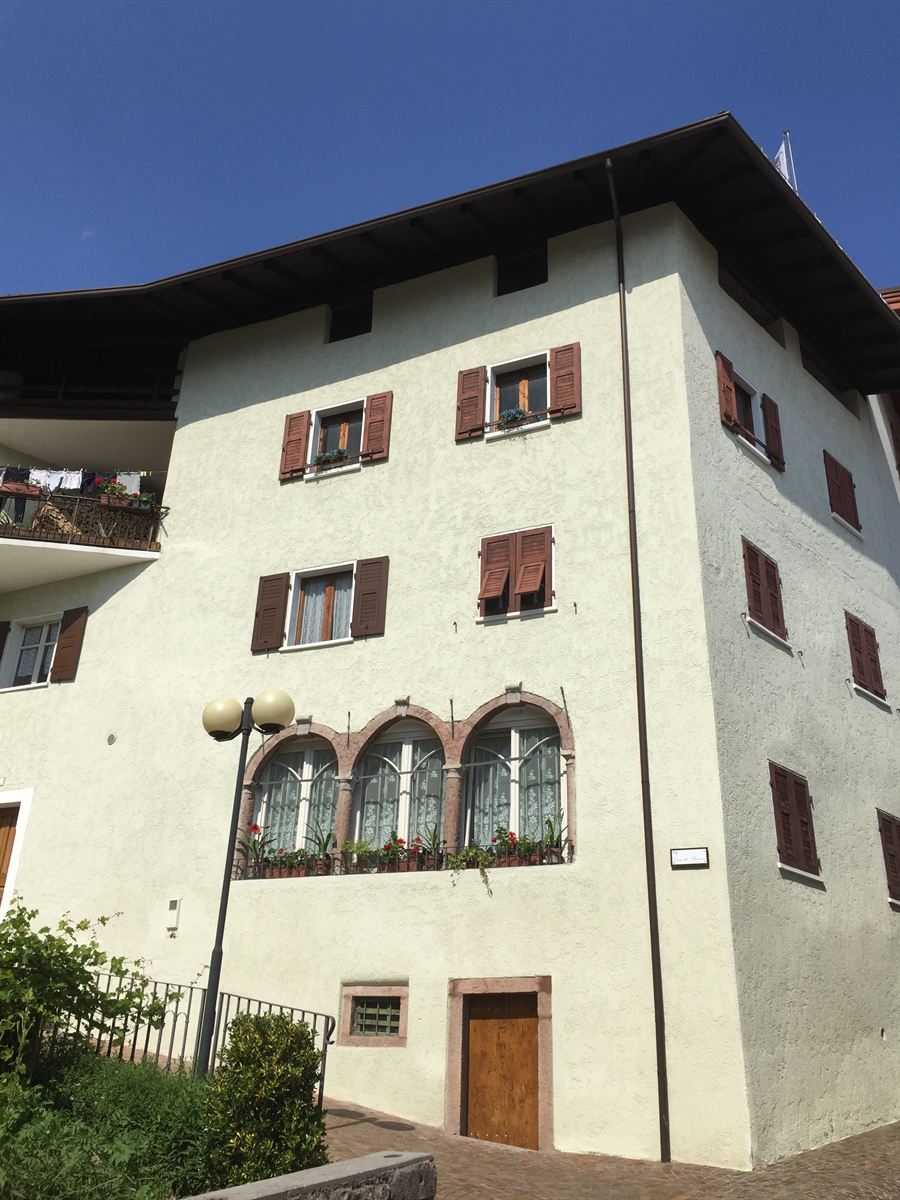
Casa dei Pariani is the apartment in the centre of San Lorenzo Dorsino: convenient for those who want everything close to hand, for those who arrive late and leave early, and for couples or small groups. Fully equipped kitchen, straightforward logistics, a genuine village.
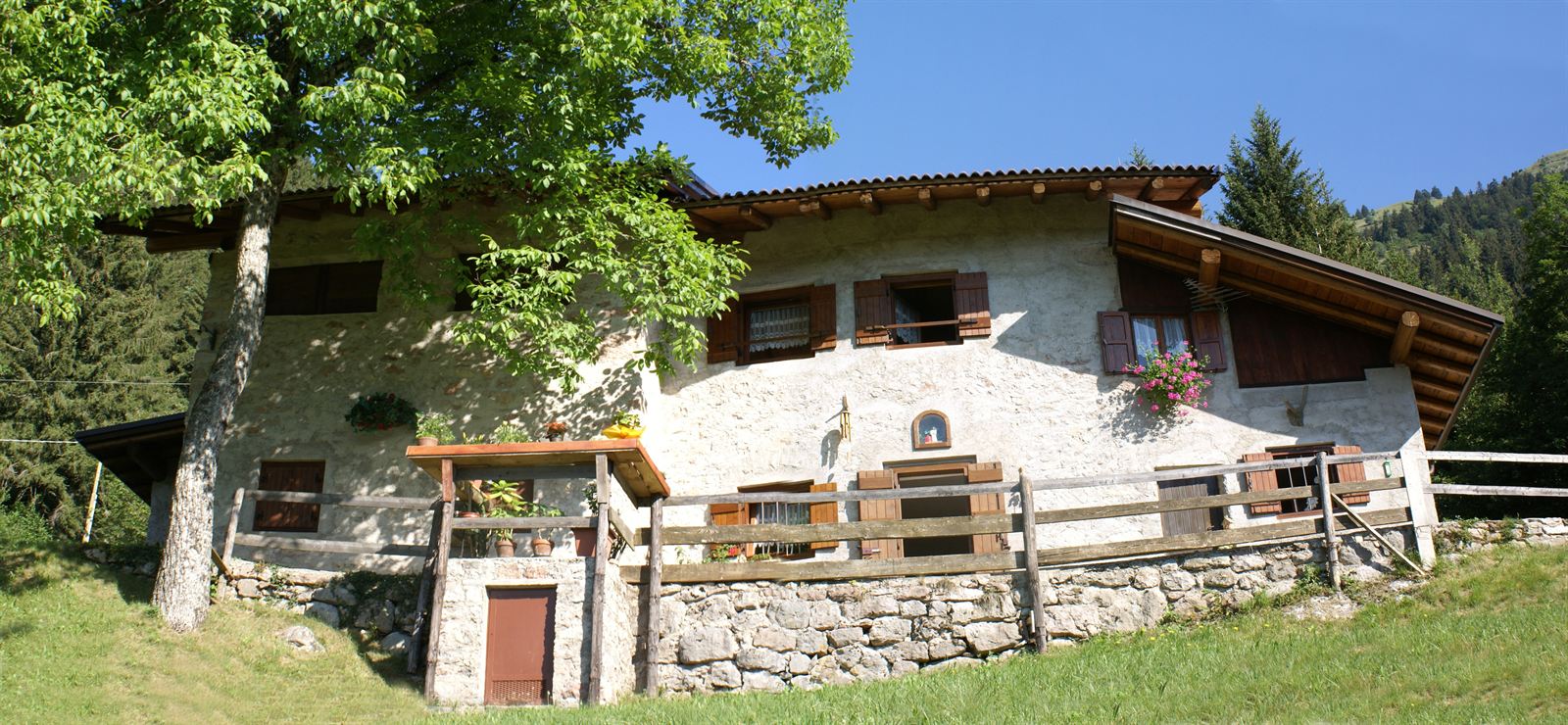
Masadega dei Pariani is the hut in the woods, for those who want real quiet and a degree of distance from the world that, after a day at altitude, feels almost necessary. More intimate, more secluded — perfect for those who already know they’ll spend the evening in silence, looking up at the stars.
Both are our answer to those looking for a proper base for the Brenta via ferratas — no compromises.