If you’re thinking of coming up here with snowshoes, here’s something to know straight away: be prepared to hear almost nothing. The woods around Masadega in winter are something else entirely — fresh snow muffling every sound, firs heavy with white, fox tracks cutting diagonally across the path. It’s the kind of silence you don’t quite know what to do with, the first time.
Snowshoeing in the woods: why the Banale in winter is a different world
In summer these woods are busy — hikers, families, mountain bikers. In winter the mountain empties out and the trails return to those who truly know them. It’s one of the things about this corner of Trentino that few people expect: the Brenta Dolomites are right there, visible on clear days, but the crowds head elsewhere. Here you snowshoe without queuing, without finding the trail already trampled by dozens of people ahead of you.
The municipality of San Lorenzo Dorsino, with its hamlets and mixed forests of firs and beeches, offers elevation gains that are manageable even for non-mountaineers. You don’t need expedition gear: a decent pair of snowshoes, some poles and the desire to set off without rushing are all it takes.
Setting out from Masadega: the forest begins right outside the door
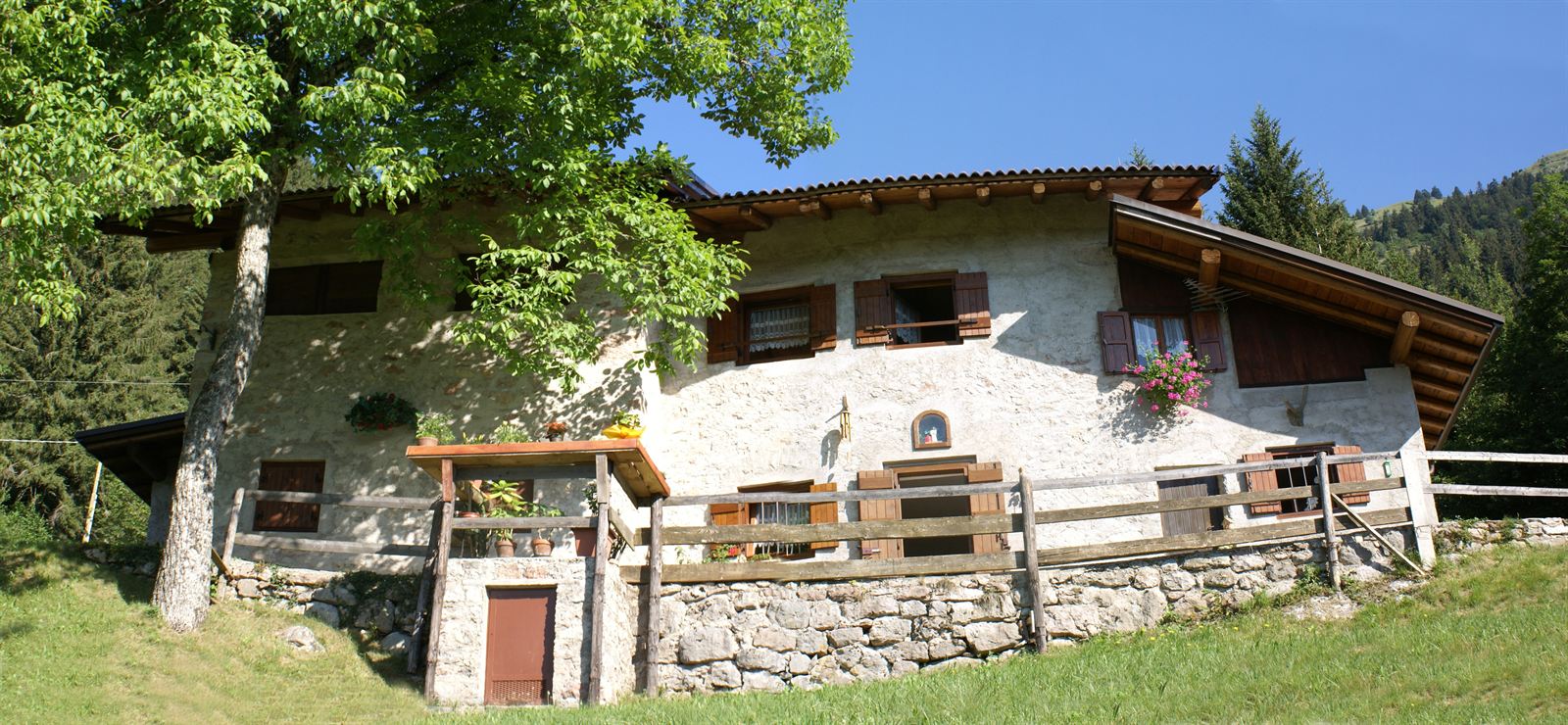
This is something we keep telling people who book the hut without quite believing it: you don’t need to get in the car to find snow. Masadega dei Pariani is in the forest. Literally. Step outside and you’re already in the wild.
From the immediate surroundings of the property you can reach — on snowshoes — the beech woods that climb towards the high pastures, or head down along the wooded slopes that look out over the Val d’Algone. The CAI trails in the area are well marked even in winter, and the SAT section of San Lorenzo in Banale knows these routes better than anyone: for updates on winter trails and snow conditions, the right place to look is the SAT San Lorenzo in Banale website.
One practical thing worth knowing: conditions at altitude can change quickly. Always check the local forecast before heading out, and if you don’t know the area well, ask in the village — people here will give you a straight answer.
What to bring (and what to leave at home)
Winter snowshoeing in the woods doesn’t call for expedition-level kit, but a few sensible choices make the difference between a good day and one you’d rather forget.
Layering is the golden rule: you start cold, you warm up on the climb, and you cool down the moment you stop. A technical fleece, a windproof waterproof jacket, warm gloves and a spare pair of socks in your rucksack will serve you well. Wet feet halfway through will ruin any day, so waterproof boots or winter trekking shoes are a must — not trainers.
In your rucksack: water (you don’t feel thirsty in the cold but you still need it), something energy-giving — nuts, chocolate, a sandwich — and a torch, even in winter. The days are short and it’s easy to lose track of time in the woods without noticing. A fully charged phone with an offline map downloaded gives you peace of mind.
What to leave at home: any expectation of finding a café open in the middle of the forest. There isn’t one. And that’s rather the point.
The slow pace of snowshoeing and what you learn along the way
Snowshoeing is slow. It’s not an adrenaline sport, you won’t be breaking any records. It’s one of those activities where your mind stops racing before your legs do, and for many people that turns out to be the most unexpected thing about a week in the mountains.
In the Banale woods in winter you notice things that vanish into the foliage in summer: abandoned nests between branches, the claw marks of a roe deer in fresh snow, the circular scratchings where a bird has dug beneath the white searching for seeds. Snow records everything that passed in the hours before, if you know how to read it.
The locals who work these woods — foresters, hunters, the occasional shepherd — read them instinctively. Those of us who stumbled upon this place, or who keep coming back because something caught us, learn gradually. There’s something genuinely useful in slowing down like this.
After snowshoeing: warming up properly matters as much as setting off well
Coming back to Masadega after two or three hours in the woods is a straightforward pleasure. The hut is exactly that — a proper mountain hut: wood, a stove, warmth rising from the fabric of the building itself. This isn’t an aesthetic point; it’s a practical one. You change, you warm up, and if you’ve done your shopping beforehand (at the village shop or by bringing supplies from home) you can cook something substantial without having to go back out.
For those who prefer more structured days — with mountain guides or themed outings focused on winter wildlife and flora — the Visit San Lorenzo Dorsino portal lists current offerings season by season, including any organised excursions in the area.
Something that comes up often in accounts from people who’ve spent a winter week here: they never got bored. The days fill themselves — between outings in the woods, Comano Spa a few kilometres away to give tired muscles a rest, and cooking — which in winter, with local produce, really comes into its own.
—
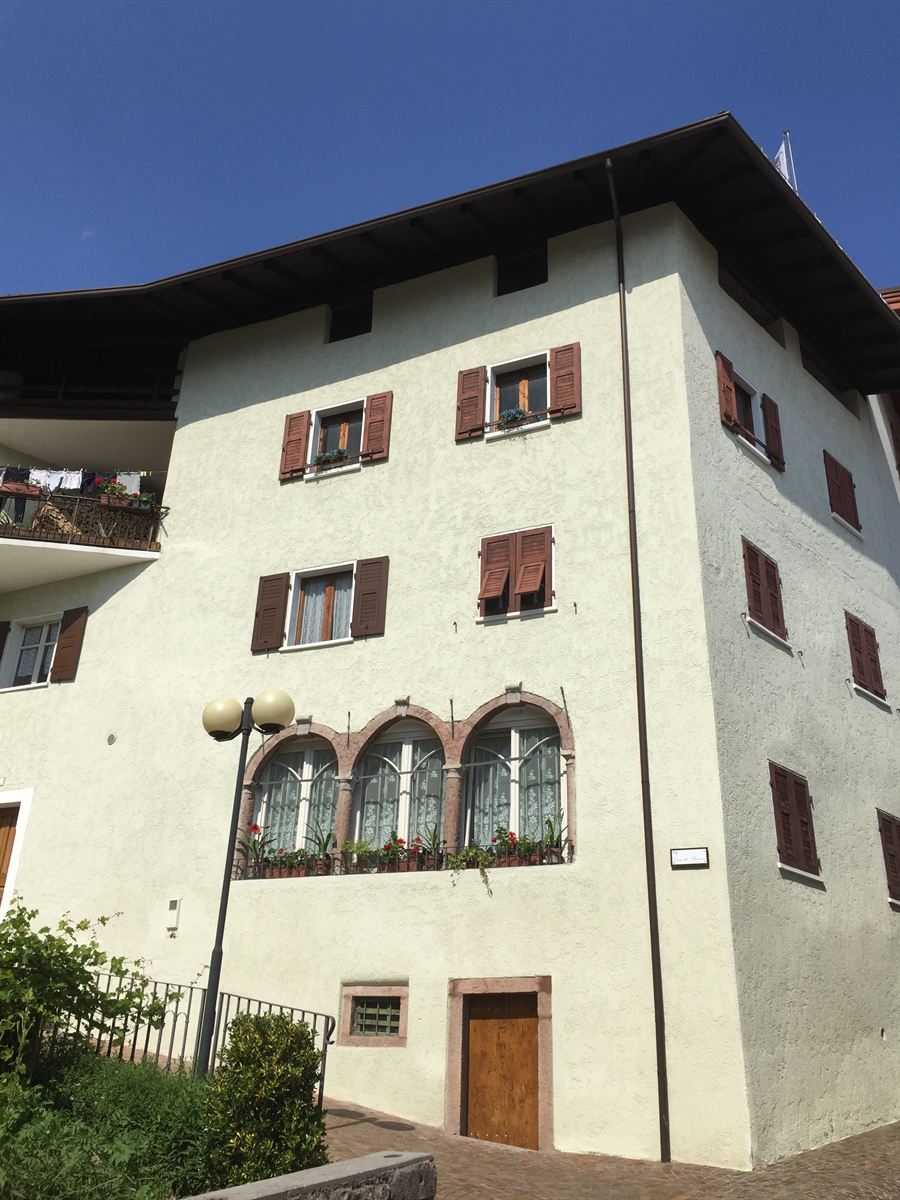
If you’re weighing up where to stay to experience this part of Trentino in winter, you have two quite different options. Masadega dei Pariani is the hut in the forest — the one you leave with your snowshoes already on your feet — ideal if you’re after genuine seclusion and immediate contact with nature. Casa dei Pariani is the apartment in the village, in the heart of San Lorenzo Dorsino, more practical for families with young children or anyone who wants to be close to amenities. Two different rhythms, the same territory. Choose whichever suits you best.