The SAT San Lorenzo Dorsino guided walks raise an old dilemma at the start of every season for anyone who arrives in the Valle del Chiese or the Brenta Dolomites with boots in their bag: join an organised outing, or grab a map and head out alone?
It’s not a rhetorical question. The answer depends on who you are, how well you know the area, and — above all — what you want to take away with you at the end of the day. This article tries to think it through.
What the SAT San Lorenzo Dorsino section actually does
The Società degli Alpinisti Tridentini has had a section rooted in San Lorenzo Dorsino for decades. This is not a tourist organisation — it’s an association of local mountain people who walk these woods and ridges all year round, not just in summer alongside visitors.
The outings they organise don’t follow the logic of a holiday package. They grow out of knowledge that has been passed down through generations, from routes that a member knows inside out because he walked them as a boy with his father. That makes a real, tangible difference.
For the up-to-date calendar of seasonal outings — including dates, difficulty ratings and how to take part — the direct reference is the SAT San Lorenzo in Banale section website.
When a guided outing genuinely makes sense
There are situations where going with a group isn’t the lazy choice — it’s the sensible one.
If it’s your first time in the Brenta Dolomites or the side valleys of the Sarca, moving with someone who knows the unmarked passages, can tell you where the path usually erodes in spring, and has an intimate feel for local weather conditions, is worth more than any GPS app.
The same applies if you’re travelling with children or with people who don’t have much experience at altitude. Having a local guide changes the stress levels of the whole day — for the person leading and for the people being led.
There’s a third reason, less obvious than the others: SAT outings are one of the few ways to connect with the San Lorenzo Dorsino community without any intermediary. Not the barman, not the apartment owner — SAT members are families, retired people, young men and women who grew up here. A conversation on the path is worth a hundred brochures.
When going it alone is the better option
That said, the solitary mountain has a quality that no group can replicate. If you’re after real silence — not the relative quiet of twenty people talking in hushed voices — you need to head out alone, or at most with one other person.
The paths around San Lorenzo Dorsino, towards the Passo del Ballino, along the shores of Lake Molveno, or heading up to the summer pastures above Dorsino, are well enough marked for walkers with reasonable experience to navigate independently. This isn’t the Garda lakeshore — you won’t lose your bearings at the first bend.
Going solo also has its own rhythm: you stop where you like, eat where you fancy, and turn back when you decide. There’s a price to that freedom — you need to know where you are and what you’re doing — but for anyone who walks in the mountains regularly, it’s simply the normal way to spend time outside.
The landscape that SAT helps you read differently
There’s one aspect of organised outings that tends to be underrated: reading the landscape. A SAT member who explains why a particular pasture has lain abandoned for thirty years, or points out the exact spot where you can understand how the summer-pasture system worked before the war, completely changes how you see what surrounds you.
The territory of San Lorenzo Dorsino and the Valli Giudicarie carries a complex rural history — emigration, abandonment, repopulation — that is etched into the paths themselves. Not in any didactic way, but for those who know how to look.
That kind of knowledge isn’t found on trail markers. It lives in people. And SAT outings are one of the few settings where it circulates freely, without the need to hire a private guide.
How to prepare for a walk in this area
Anyone wanting to join a SAT outing — or simply to walk independently in the valleys around San Lorenzo Dorsino — should be aware of a few practical things.
The elevation gain in this area can vary considerably over short distances: the ascents are quick, and afternoon returns can catch out anyone accustomed to more gradual mountain terrain. Sturdy-soled walking boots are not a minor detail, even in summer. The same goes for a spare layer, because the weather at altitude shifts with a speed that locals take for granted and visitors often don’t.
If you’re joining an organised outing, read the difficulty rating carefully: SAT sections use the standard CAI scale, but the local interpretation tends to be honest and unvarnished. A route classified EE is genuinely demanding.
For up-to-date information on the programme, registration and logistical details for this season’s outings, the reference point remains the SAT San Lorenzo in Banale section website.
Where to stay so you’re already on the ground
One of the simplest — and most underrated — things when hiking with a local group is setting off from the right place. Not from a car park, not from a railway station: from the village itself.
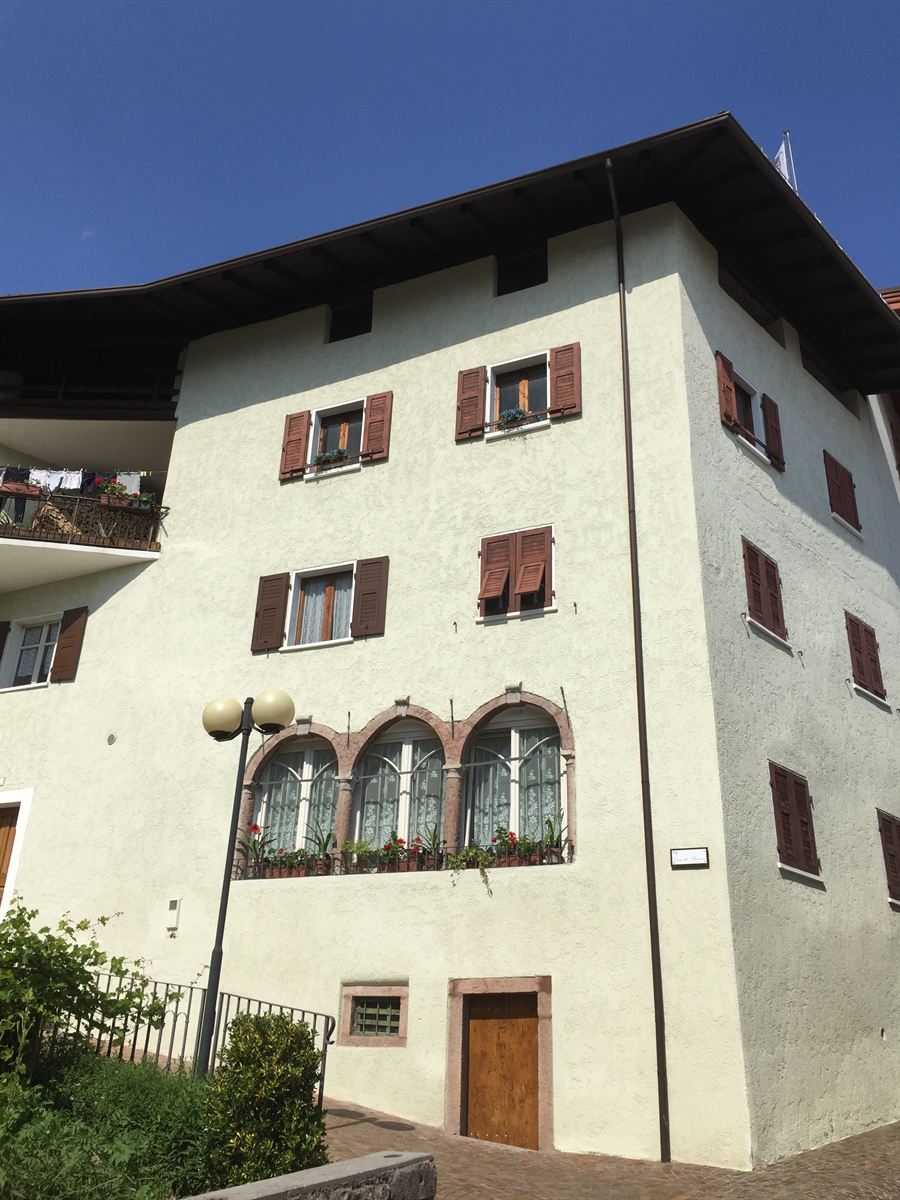
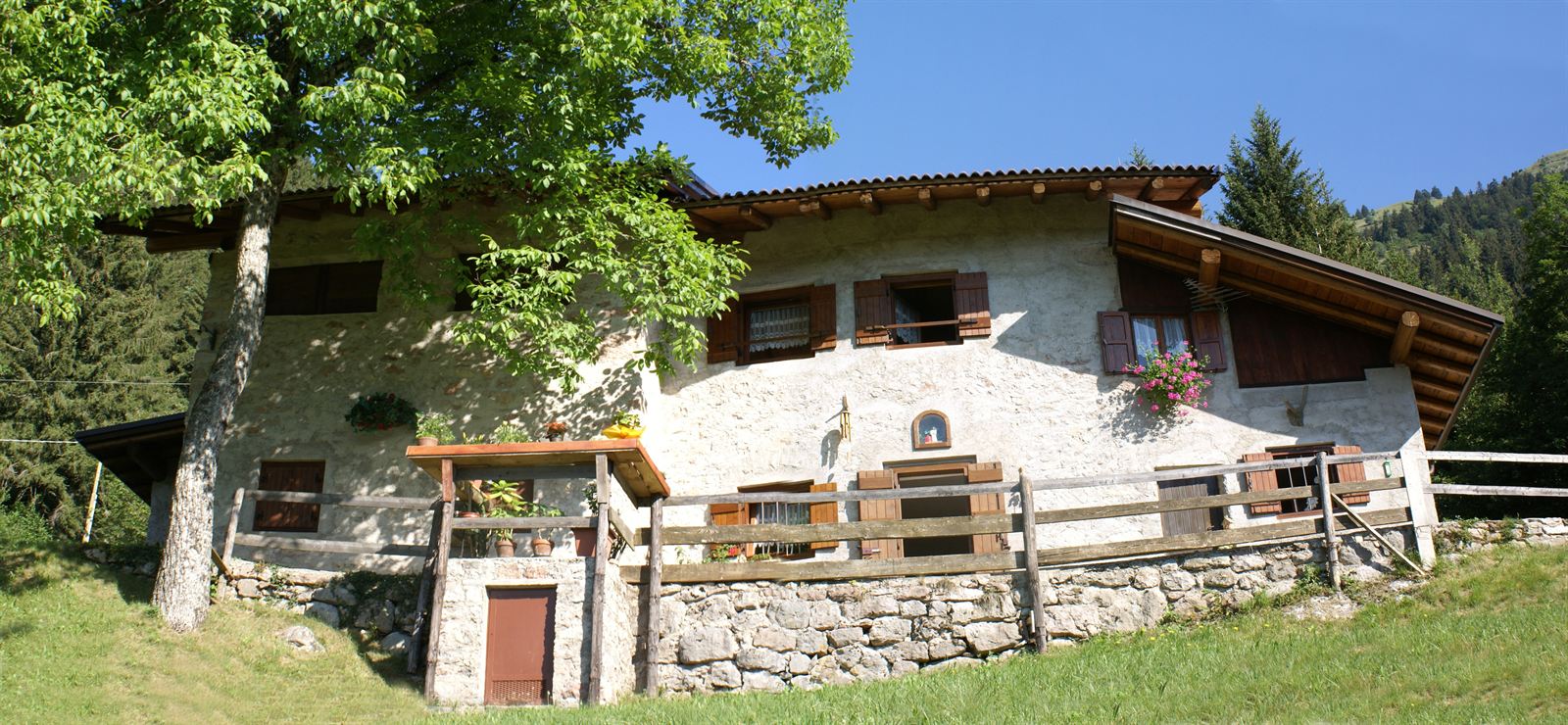
If you want to be in San Lorenzo Dorsino without an hour’s drive every morning, Casa dei Pariani is an apartment in the village, a short walk from the square and the SAT meeting points. If you’d prefer something more tucked away — in the woods, with less passing traffic and more quiet — Masadega dei Pariani is a mountain hut outside the village, designed for those who want to properly switch off between one walk and the next.
In either case, you’re minutes from the trails — no logistical planning required.